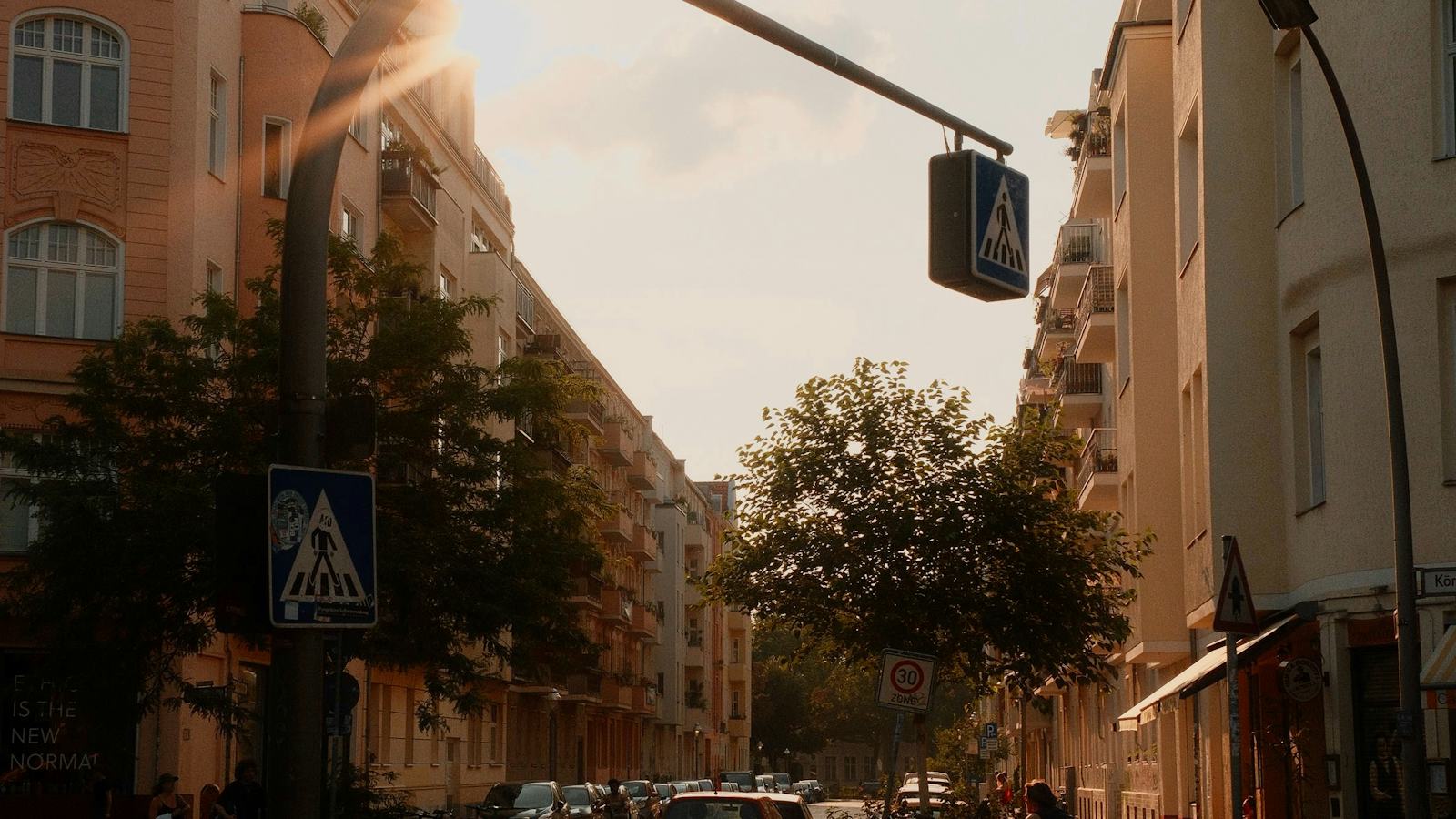
Before you accept a job in Berlin, work out what your monthly costs will be. This guide covers the biggest items for a tech worker moving to Berlin: rent, the deposit, transport, health insurance and the fixed fees every household pays. At the end, it compares Berlin rents with Munich and Vienna.
We only quote figures from official sources. Where no official figure exists, such as for groceries or eating out, we say so and tell you how to check.
Rent in Berlin
Rent is the largest cost for most people. German rents are usually quoted in two ways:
- Net cold rent (Nettokaltmiete): the rent for the flat only.
- Warm rent (Warmmiete): net cold rent plus running costs such as heating, water and building services. Check whether electricity and internet are included.
What the Berlin rent index says
The official Berlin rent index (Mietspiegel) 2026 shows an average net cold rent of €7.71 per square metre a month. This is the median across about 17,000 rents collected from tenants and landlords, covering around 1.6 million flats (Berlin Senate Department for Urban Development). The full table by size, age and location of the flat is in the Mietspiegel 2026 PDF.
Be careful with this number. The rent index measures the rents in its dataset, which includes many long-running contracts. It is not a list of asking rents for flats on the market today. Before you budget, look at current listings for the areas you like.
The rent brake
In areas that a state government has designated as having a tight housing market, the rent at the start of a new lease may not be more than 10% above the local comparative rent (§ 556d German Civil Code). The rent index helps show what the local comparative rent is. There are exceptions, so if a rent looks too high, ask a tenants’ advice service.
Deposit
Most landlords ask for a deposit (Kaution). By law it can be at most three months’ net cold rent, and you may pay it in three monthly instalments, starting with the first month’s rent (§ 551 German Civil Code). Plan for this: in your first months you may be paying rent and a deposit at the same time.
Furnished and temporary flats
If you start in a furnished or temporary flat while you look for something long-term, check that the landlord will give you the landlord confirmation you need to register your address (§ 19 Federal Registration Act). Without it, you can’t complete your Anmeldung. Our relocation checklist explains why this matters.
Getting around
- Deutschlandticket: €63 a month in 2026. It covers local and regional public transport across Germany, including in Berlin (Federal Government). Ask your employer whether it subsidises the ticket.
Health insurance
Health insurance is taken from your salary, so it doesn’t show up as a separate bill if you are employed. It still affects your budget, because it reduces your net pay. In 2026, public health insurance costs 14.6% of your salary plus your insurer’s additional rate (2.9% on average), split between you and your employer (Federal Ministry of Health). Long-term care insurance adds 3.6%, or 4.2% if you have no children; the employee pays 1.8% or 2.4% of that (Federal Ministry of Health).
Our tax basics guide shows all deductions from your gross salary.
Fixed household fees
- Broadcasting fee (Rundfunkbeitrag): €18.36 a month per household (rundfunkbeitrag.de). If you share a flat, only one person pays.
- Electricity, internet and mobile: prices vary by provider and contract. Compare offers before you sign, and check the minimum contract term.
- Private liability insurance: optional, but some landlords ask for it.
Everyday costs
We did not find an official, up-to-date Berlin price list for groceries, eating out or gyms, so we don’t quote one. The best check is your own: look at supermarket websites and at the prices in the neighbourhoods you are considering.
Build your own monthly budget
Use this list to build a budget for your situation. Fill in your own numbers:
| Item | Where the figure comes from |
|---|---|
| Rent (warm) | Current listings; compare with the Mietspiegel 2026 |
| Electricity | Your provider’s offer |
| Internet and mobile | Your provider’s offer |
| Broadcasting fee | €18.36 per household (rundfunkbeitrag.de) |
| Public transport | €63 Deutschlandticket (Federal Government), minus any employer subsidy |
| Groceries and eating out | Your own estimate |
| Savings for the deposit | Up to three months’ net cold rent (§ 551 German Civil Code) |
Then compare the total with your net salary, not your gross salary. Our salary guide shows what employers post, and the tax basics guide links to the official net pay calculator.
Berlin compared with Munich and Vienna
Official rent figures are measured differently in each city, so compare them with care.
| City | Official figure | What it measures | Source |
|---|---|---|---|
| Berlin | €7.71 per m² | Median net cold rent, Mietspiegel 2026 | Berlin Senate |
| Munich | €15.38 per m² | Average net cold rent, Mietspiegel 2025 | City of Munich |
| Vienna | €7.9 per m² (€10.6 including running costs) | Average rent of main-tenancy flats, 2025 | Statistics Austria |
Munich
Munich’s rent index shows an average net cold rent of €15.38 per square metre in its 2025 edition, 5.5% more than the 2023 edition (City of Munich). If you are comparing a Berlin offer with a Munich offer, rent is the first thing to check. See jobs in Munich.
Vienna
In Vienna, the average rent for a main-tenancy flat in 2025 was €10.6 per square metre including running costs, or €694.3 per flat per month. Without running costs it was €7.9 per square metre (Statistics Austria). The figure covers all main-tenancy flats, not only new contracts, so asking rents in current listings may differ.
Other fixed costs in Vienna include the ORF fee of €15.30 a month per household (ORF-Beitrags Service) and an annual e-card service fee of €25.00 in 2026 (migration.gv.at). For Vienna public transport prices, check Wiener Linien directly. See jobs in Vienna.
Frequently asked questions
How much is rent in Berlin in 2026?
The official Berlin rent index 2026 shows a median net cold rent of €7.71 per square metre a month. It includes many long-running contracts, so it is not a list of today’s asking rents. Before you budget, check current listings for the areas you like, and add running costs to get the warm rent.
What is the difference between cold rent and warm rent?
Net cold rent (Nettokaltmiete) is the rent for the flat only. Warm rent (Warmmiete) adds running costs such as heating, water and building services. Electricity and internet may or may not be included, so check each listing. Your deposit is based on the net cold rent: by law, at most three months of it.
How much deposit do Berlin landlords ask for?
By law, the deposit (Kaution) can be at most three months’ net cold rent, and you may pay it in three monthly instalments, starting with the first month’s rent. Most landlords ask for one. Plan for it in your budget: in your first months, you may be paying rent and a deposit at the same time.
Is Berlin cheaper than Munich?
On rent, the official figures say yes. Munich’s 2025 rent index shows an average net cold rent of €15.38 per square metre, against a median of €7.71 in Berlin’s 2026 index. The two indexes are measured differently, so compare them with care, and look at current listings in both cities before you compare job offers.
How much does public transport cost in Berlin?
The Deutschlandticket costs €63 a month in 2026. It covers local and regional public transport across Germany, including in Berlin, so the same ticket works for your commute and for regional trips. Ask your employer whether it subsidises the ticket, and subtract any subsidy when you build your monthly budget.
Which fixed monthly fees should I budget for in Berlin?
Every household pays the broadcasting fee (Rundfunkbeitrag) of €18.36 a month; in a shared flat, only one person pays. Add electricity, internet and mobile, which vary by provider and contract. Private liability insurance is optional, but some landlords ask for it. Health insurance is taken from your salary rather than billed separately.
Next steps
- Find English-speaking jobs in Berlin. No German required.
- Compare offers with our salary guide.
- Plan your move with the relocation checklist.